Calgary's Air Is Unsafe Again — Same Fires, New Smoke
Calgary is under another air quality alert as wildfire smoke from B.C. drifts back in — here's what to know before you head outside.

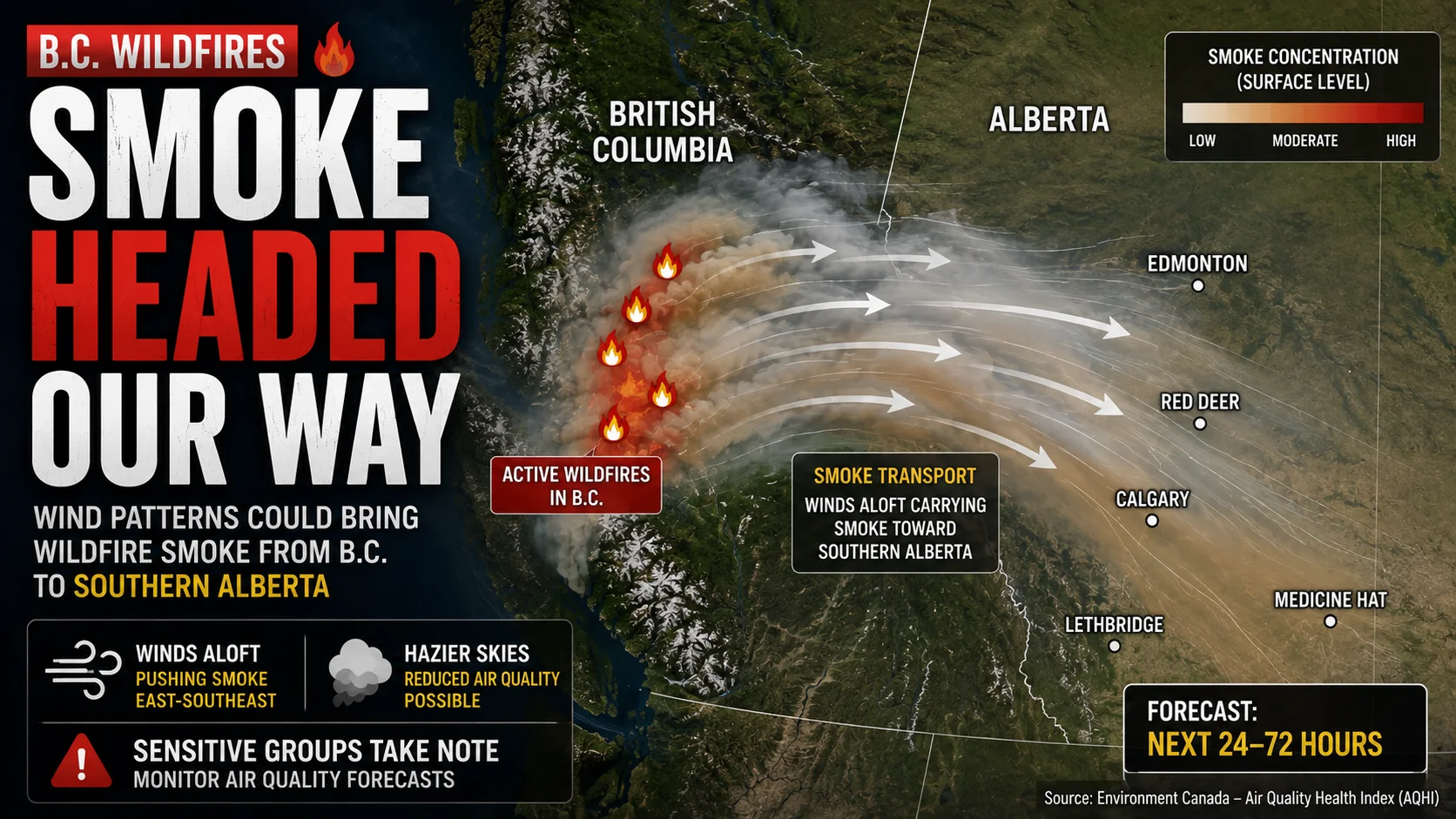
Environment Canada issued a moderate-impact air quality alert for Calgary early Sunday as wildfire smoke drifted in yet again, with conditions expected to improve by Monday. It's the latest in a string of smoke episodes that have hit the city hard this summer.
Why You Should Care
This is the kind of story that directly affects your Tuesday morning run, your kid's outdoor soccer practice, and whether it's worth opening the windows tonight — not some abstract environmental headline. Calgary has already recorded some of the worst air quality on the entire planet on at least one day this summer, according to Swiss air-monitoring firm IQAir, and with the fires driving this latest round still actively burning in B.C., it's worth checking the forecast before making outdoor plans this week.
Complex to Simple
Wildfire smoke travelling hundreds of kilometres to blanket a city works a lot like secondhand smoke drifting through an open apartment window from a neighbour's balcony — you don't need to be anywhere near the actual fire to breathe in its consequences. The tiny particles in wildfire smoke, known as PM 2.5, are roughly 30 times smaller than a human hair, small enough to slip past your body's usual defenses and settle deep in your lungs, which is why health officials urge limiting outdoor time even when a fire itself is far away.
What Both Sides Are Saying
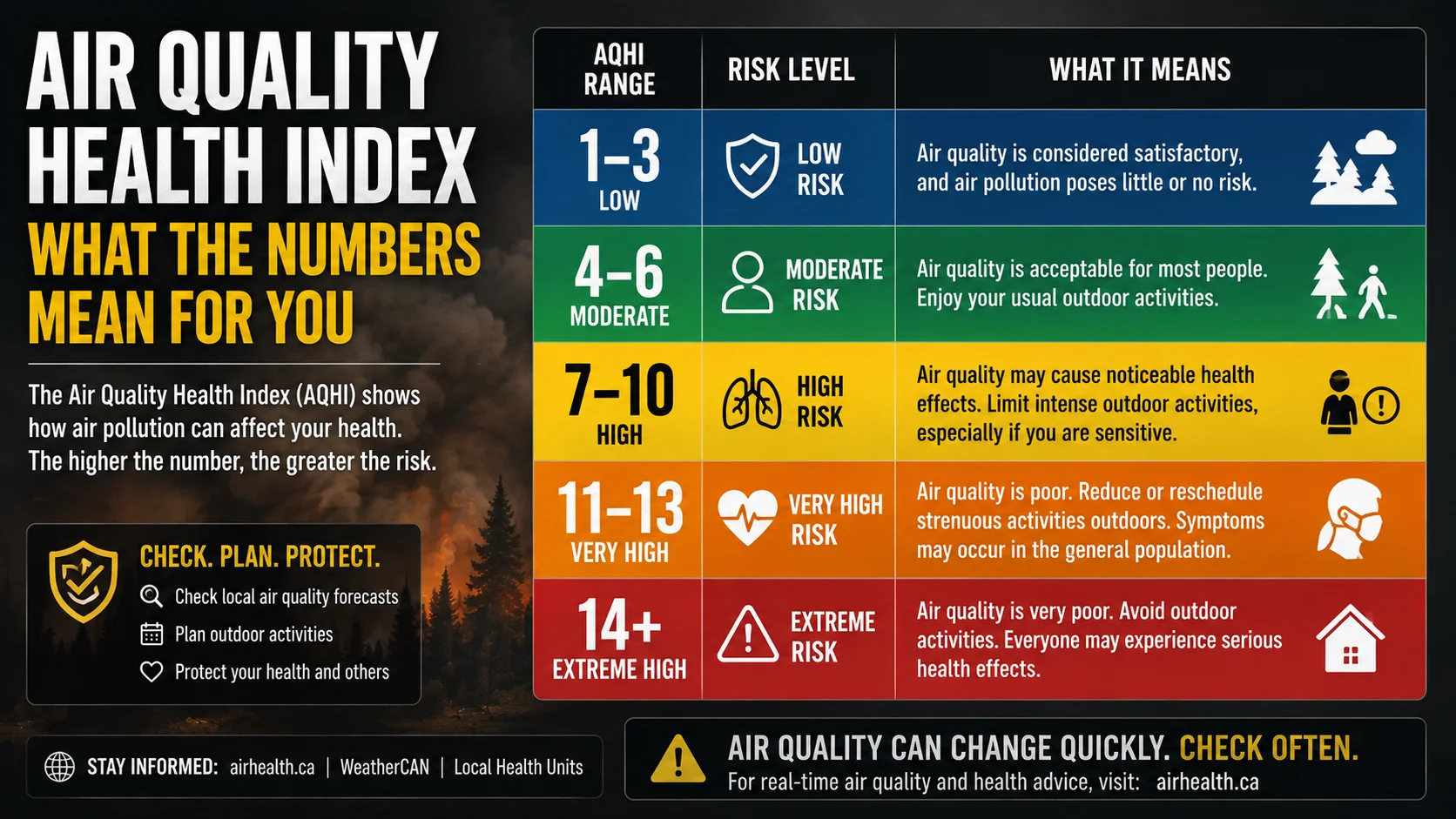
Environment Canada frames these alerts as standard, science-based public health guidance — a moderate-impact warning that specifically flags higher-risk groups like seniors, pregnant people, and those with existing health conditions. Local advocacy voices, including the Calgary Region Airshed Zone, have pushed for the city to be more proactive about closing outdoor attractions during the worst smoke days, pointing to research showing spikes in migraine-related hospital visits during heavy smoke periods.
What's Next
With B.C. Wildfire Service warning that drought-stressed conditions could fuel renewed fire growth any time the weather turns hot and windy again, expect this to be a recurring story through the rest of August — worth bookmarking the Air Quality Health Index rather than waiting for the next alert.