Drone Strikes Ignite Middle East Powder Keg
A wave of drone strikes on Saudi oil facilities sparks a rapid military response.

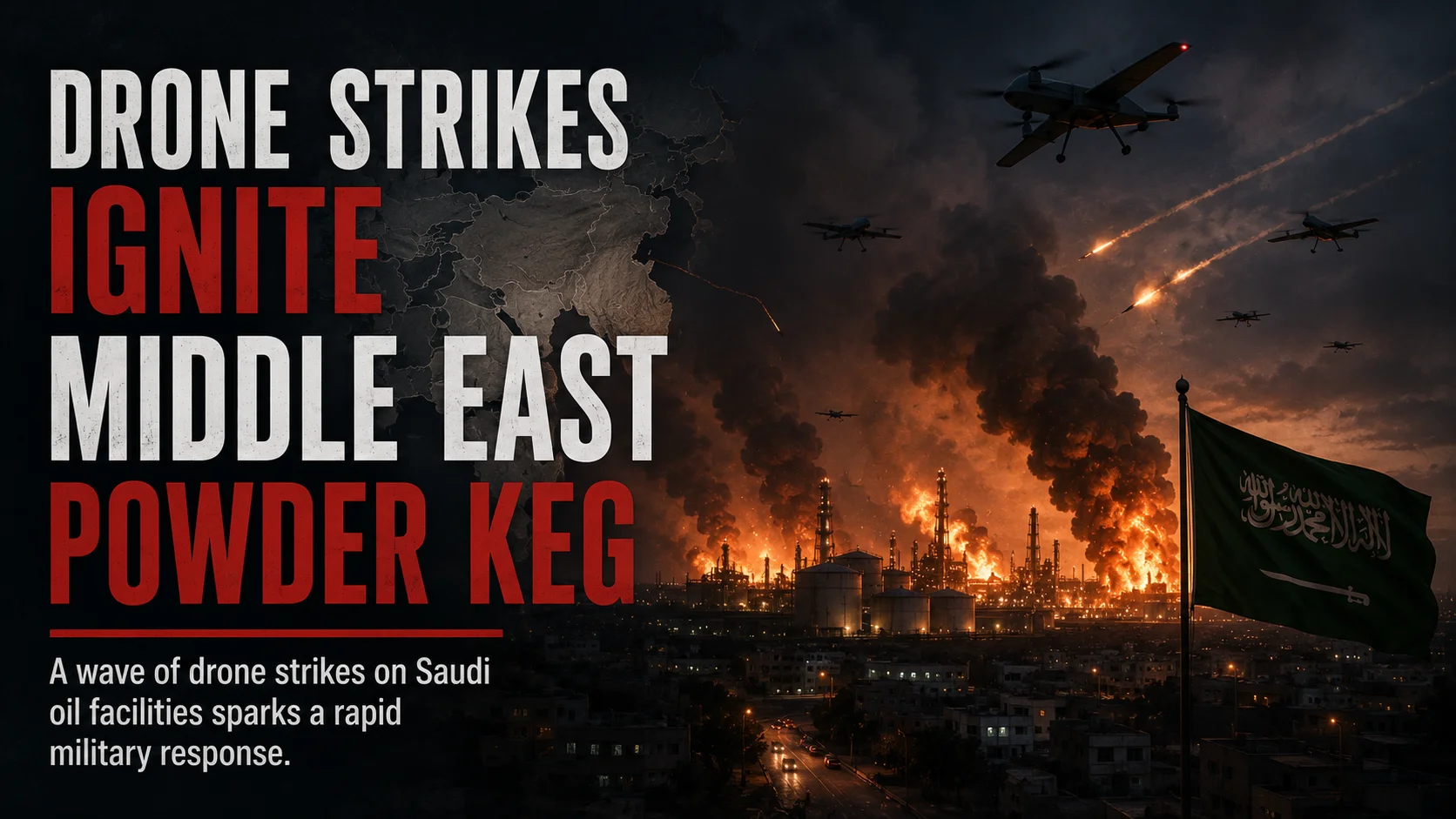
Inside 72 Hours That Pushed the Middle East Back to the Brink of War Deck: A wave of drone strikes on Saudi oil facilities triggered a rapid, coordinated military response — and reignited fears of a wider regional war.
Overnight Wednesday, the fragile calm across the Middle East cracked. Saudi Arabia said it intercepted and destroyed several drones aimed at oil facilities in its Eastern Province, the latest in a string of more than 30 drone attacks over 72 hours that it blamed on Iran-backed militias operating out of Iraq. Hours later, U.S. Central Command confirmed that American and Saudi fighter jets had struck multiple logistics and weapons sites across eastern Iraq in response.
It was the first time Saudi Arabia has publicly claimed responsibility for strikes inside Iraq since a US-Iran war began five months ago, in February. Iraq's Popular Mobilisation Forces (PMF) — an umbrella of mostly Shiite militias that Iran has used for years to project influence inside its neighbor — said at least 20 of its fighters were killed and 32 wounded in the overnight raids.
The exchange didn't stay contained to Iraq. Iran fired missiles toward a U.S. air base in Jordan, which U.S. officials called a major attack, intercepted by Patriot batteries and allied air defenses. Iran's government warned that blaming it for the drone strikes was a "major miscalculation," raising the odds of direct retaliation.
For people thousands of miles away, this isn't abstract. Saudi Arabia is the world's largest oil exporter, and its Eastern Province sits at the heart of that production. Any sustained disruption there ripples into gas prices and heating bills worldwide — a pattern global markets have watched warily since the war began. Diplomats are trying to defuse the wider standoff: Oman has proposed a new regional deal to secure the Strait of Hormuz, the narrow waterway that carries roughly a fifth of the world's oil and gas.
Iraq remains the pressure point. Washington and Tehran are both nominally allied with Baghdad, and that contradiction has turned the country into a proxy battlefield for years, leaving its government struggling to balance both patrons without picking a side. President Trump said the strikes were coordinated with Iraqi authorities, though Iraq's government has publicly condemned what it called a dangerous escalation.
Whether this marks a new phase of the conflict or another spike in an already volatile five-month war depends largely on what Iran does next.