Trump Revives a 1930 Law Nobody's Used Since — Canada Pays 50% Starting Aug. 19
Trump invoked a never-before-used 1930 tariff law to hit Canadian goods with 50% duties starting Aug. 19 — no USMCA exemption applies

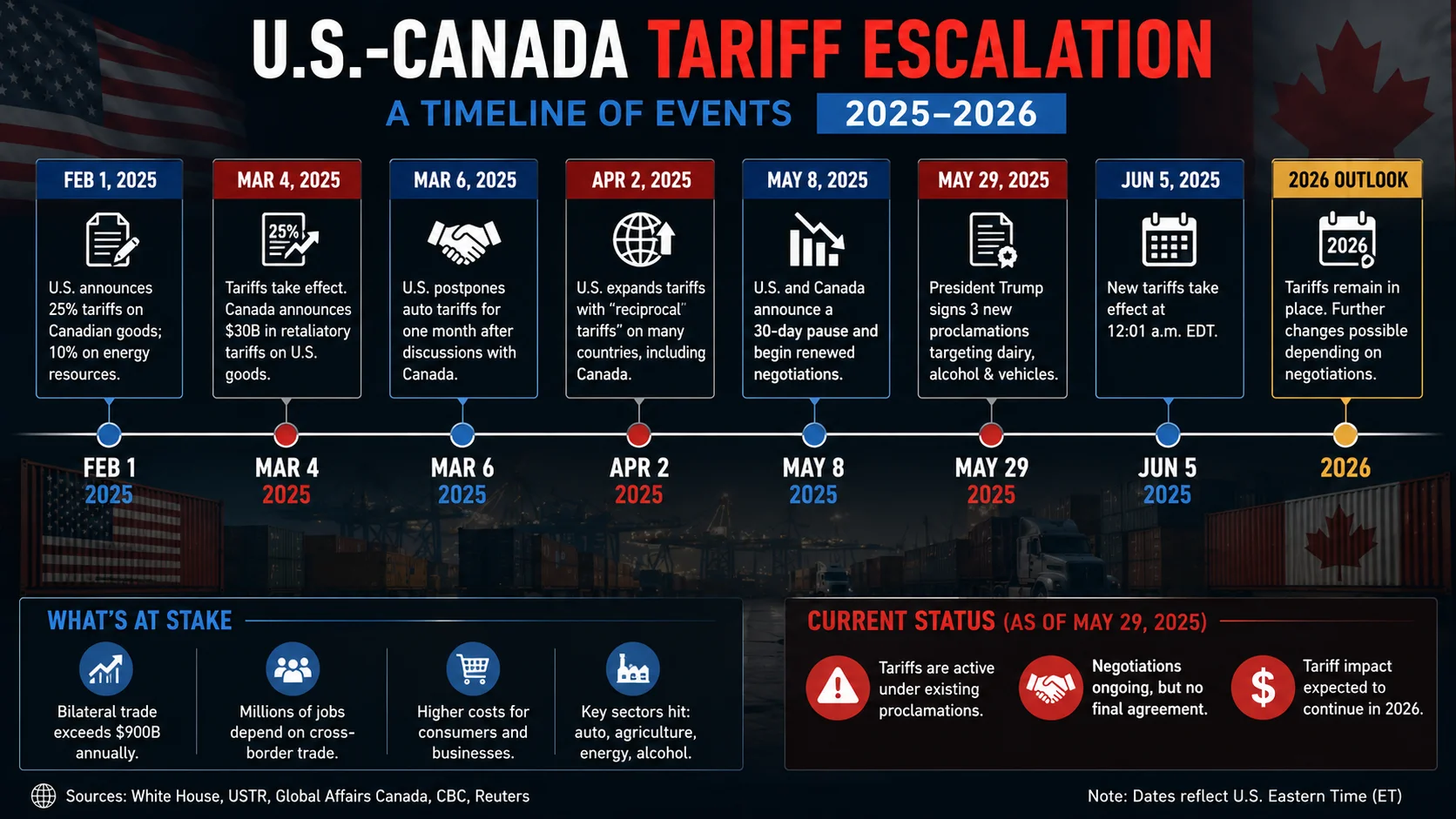
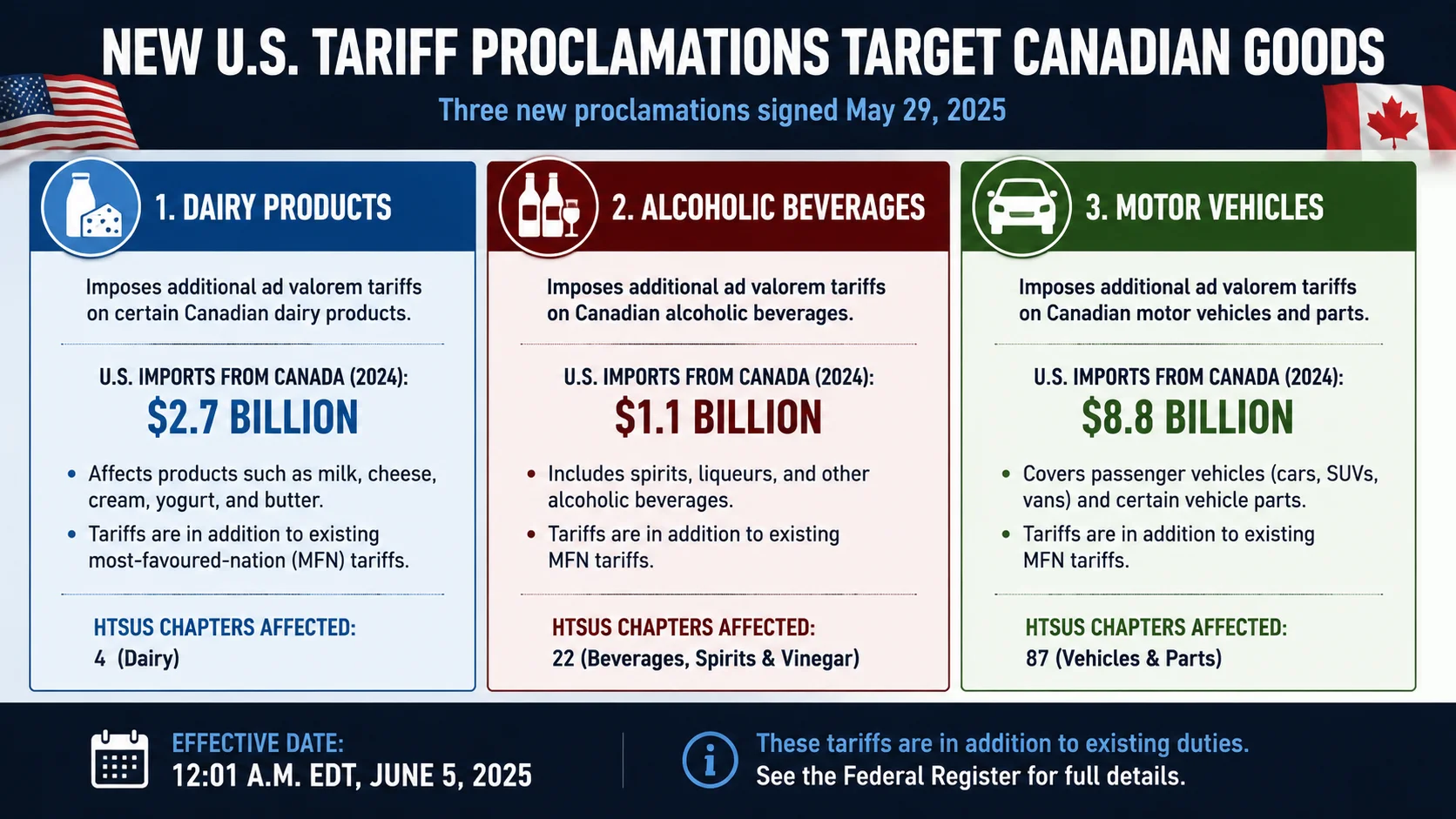
President Trump signed three proclamations invoking Section 338 of the Tariff Act of 1930 — a law that hasn't been used this way in nearly a century — to slap a 50% tariff on roughly $20 billion of Canadian dairy, alcohol and auto exports. The tariffs take effect August 19.
Why You Should Care
This one hits differently than the tariff threats Canadians have gotten used to over the past year, because Section 338 has no exemptions built in — not even for goods that are fully USMCA-compliant. If you buy Canadian wine, dairy products, or a vehicle assembled north of the border, the cost is about to climb, and there's no existing trade-deal loophole to soften it. Import lawyers are already calling it the "nuclear option" precisely because it sidesteps the usual review process entirely.
Complex to Simple
Most tariff fights are like a slow-moving lawsuit — there's an investigation, a public comment period, months of legal back-and-forth before anything actually changes. Section 338 skips all of that. It's the difference between suing your neighbour over a fence dispute and just walking over and moving the fence yourself while the paperwork catches up later. That's why trade lawyers are watching so closely: it's a legal shortcut nobody expected to see used at this scale.
What Both Sides Are Saying
The White House frames the move as leveling the playing field, arguing Canada discriminates against U.S. dairy, alcohol and auto exports through supply management and provincial liquor board rules. Canadian officials and legal scholars counter that the law was effectively superseded by later trade statutes in 1962, which is why some expect a court challenge — not from Canada's government, but from an American importer forced to pay the new duties.
What's Next
Watch for two things before August 19: whether Ottawa responds with retaliatory tariffs of its own, and whether a U.S. importer files the court challenge trade lawyers are anticipating — a ruling against Section 338's use here could unwind the whole thing before it fully bites.