The US Just Banned 85% of the World's Robots
The US bans 85% of the world's robots, targeting Chinese manufacturers.

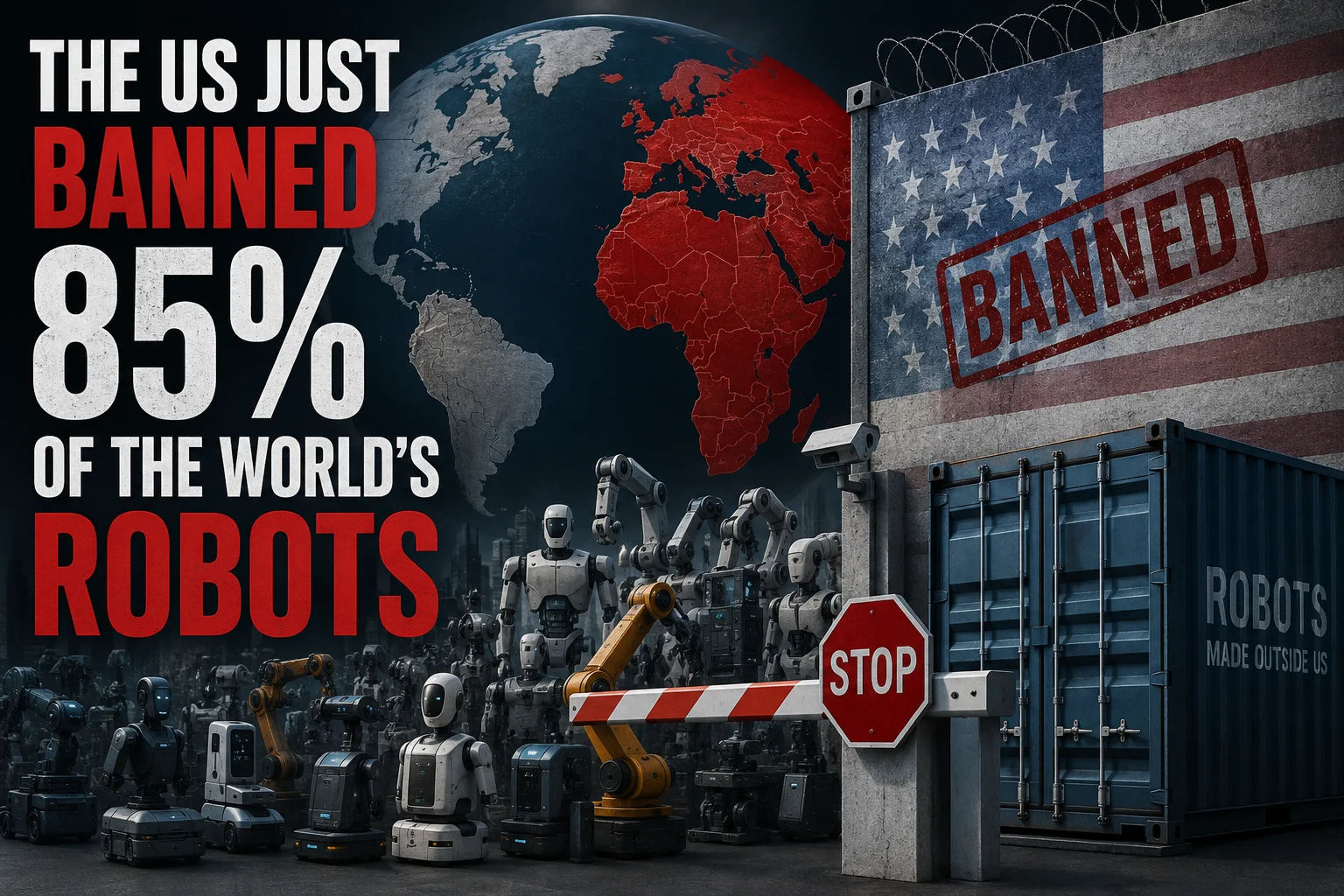
The US Just Locked China's Robots Out of America — Here's Why It Matters Deck: A new FCC ban on foreign humanoid and quadruped robots targets Chinese manufacturers that make roughly 85% of the world's supply.
The Federal Communications Commission has banned imports of new foreign-made humanoid robots, four-legged "robot dog" quadrupeds, and power inverters, in a move that squarely targets China's dominance of the emerging robotics industry.
The FCC added the devices to its "Covered List," a designation reserved for technology the U.S. government considers a national security threat. Officials pointed to cybersecurity risks, vulnerable supply chains, and concerns that foreign-built robots could be used to collect data inside American homes, businesses, and critical infrastructure.
The timing matters. China currently builds an estimated 85 to 87 percent of the world's humanoid robots, with six of the top ten manufacturers based there. Companies like Unitree — recently flagged separately by the Pentagon over ties to the Chinese military and barred from Defense Department contracts — have driven costs down fast enough to worry American competitors like Tesla, Figure, and Boston Dynamics. Analysts say those U.S. firms stand to benefit most directly from the ban, which effectively shields them from Chinese price competition just as the humanoid robot market — projected to reach $15 billion by 2030 — starts to take off.
The rule only blocks new models that haven't yet been authorized for U.S. sale; robots already approved can continue to be sold. Even so, the move lands at a delicate diplomatic moment: it comes weeks ahead of a planned September meeting between President Trump and Chinese leader Xi Jinping, adding another point of friction to an already tense trade relationship.
Analysts are split on how much this actually slows China down. Some argue it removes a major future export market and protects U.S. developers from price undercutting. Others note China's domestic manufacturing base is large enough, and other export markets open enough, that the practical impact may be limited.
Either way, it's a preview of what's likely to keep happening as robotics, like semiconductors before it, becomes the next front in the U.S.-China tech rivalry.
Comments (0)
No comments yet. Be the first to share your thoughts.