Canada Quietly Added 18,000 Jobs — and Nobody Noticed
Canada added 18,000 jobs in June and unemployment eased to 6.5%, with young workers driving the gains after a rocky start to 2026.

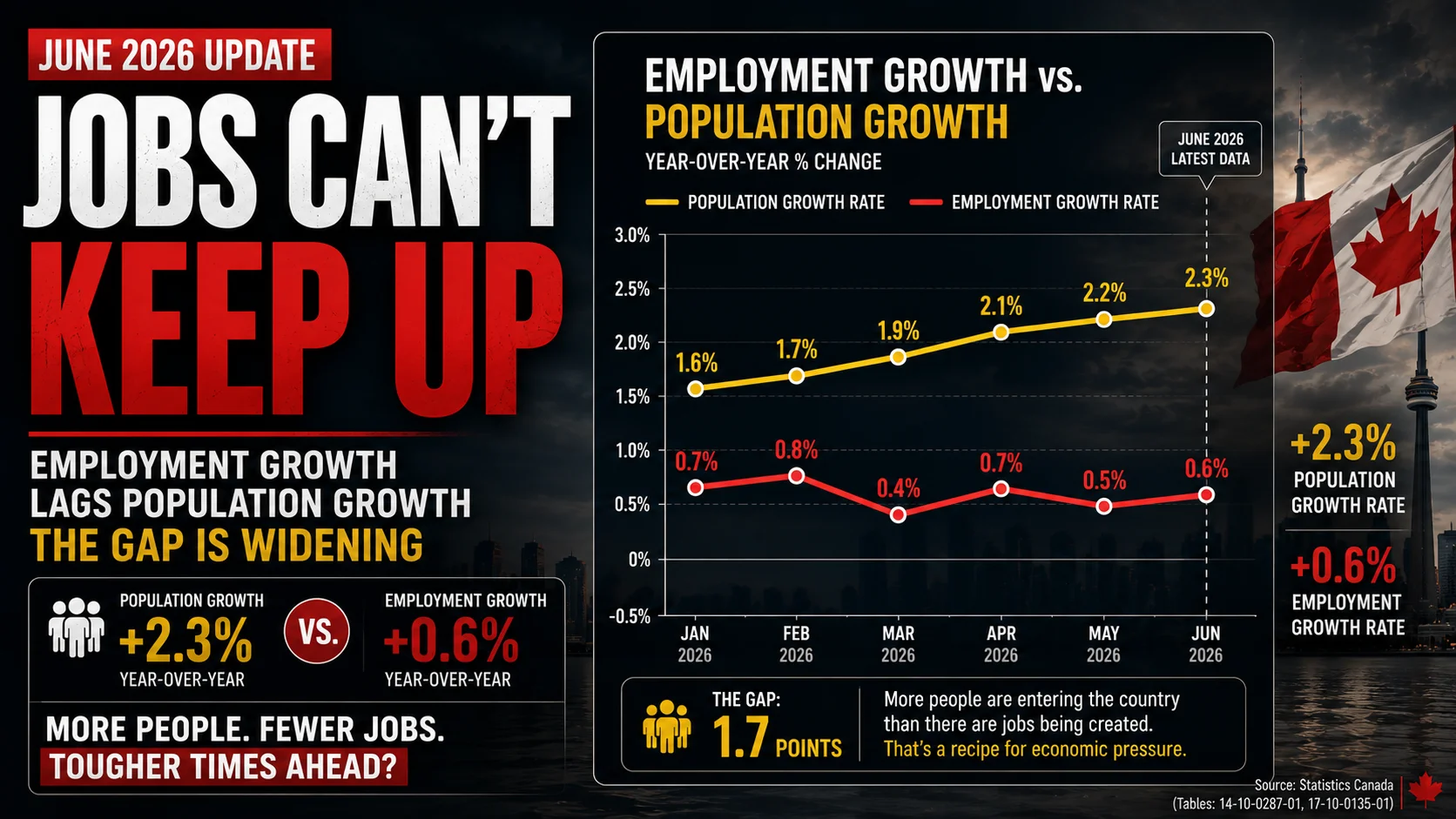
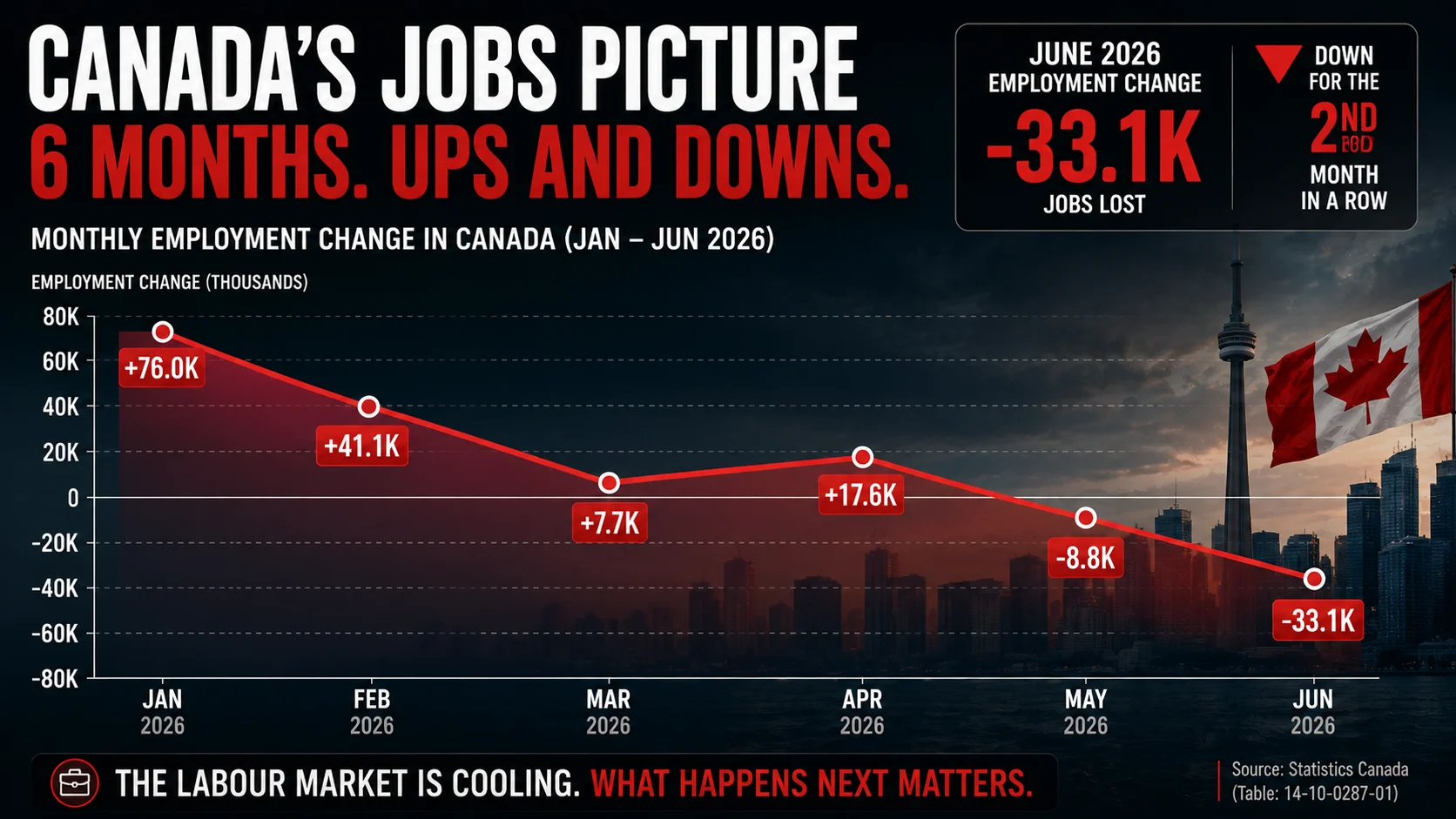
Statistics Canada's June labour force survey showed the economy added 18,000 jobs, nudging the unemployment rate down a tenth of a point to 6.5% — a modest but welcome follow-up to May's much larger surge of 87,800 jobs.
Why You Should Care
Youth unemployment is one of those numbers that rarely makes headlines but says a lot about how healthy an economy actually is underneath the surface — and June's report showed the youth jobless rate dropping seven-tenths of a point to 12.7%, with young workers finding jobs in retail, food service, and recreation. If you've got a teenager or a recent grad job-hunting this summer, or you run a small business trying to staff up for the season, this is the clearest signal yet that the summer job market genuinely loosened up compared to earlier this year.
Complex to Simple
Think of the Canadian job market like a patient recovering from a rough winter. Early 2026 was rocky — the economy actually lost a net 112,000 jobs in the first four months of the year. May and June's gains are like the patient's fever finally breaking: it's not a full recovery, and the underlying vital signs (population growth is barely outpacing job creation) are still weak, but the direction, for now, is the right one.
What Both Sides Are Saying
Economists broadly welcomed the report as a sign of resilience given the headwinds — high energy prices from the Iran war, restrictive interest rates, and ongoing tariff disputes with the U.S. BMO's Doug Porter offered a more cautious read, noting it "doesn't take a lot of new jobs" to move the unemployment rate given how slowly Canada's working-age population is growing, meaning the improvement may say as much about a shrinking labour pool as genuine hiring strength.
What's Next
July's jobs report lands this Friday, August 7 — a repeat of June's modest gains would support the Bank of Canada's current wait-and-see approach heading into September, while a surprise drop would reopen the door to a rate cut discussion that's been mostly off the table since spring.
Support Independent Journalism