Your Mortgage Rate Isn't Going Down Anytime Soon — Here's Why
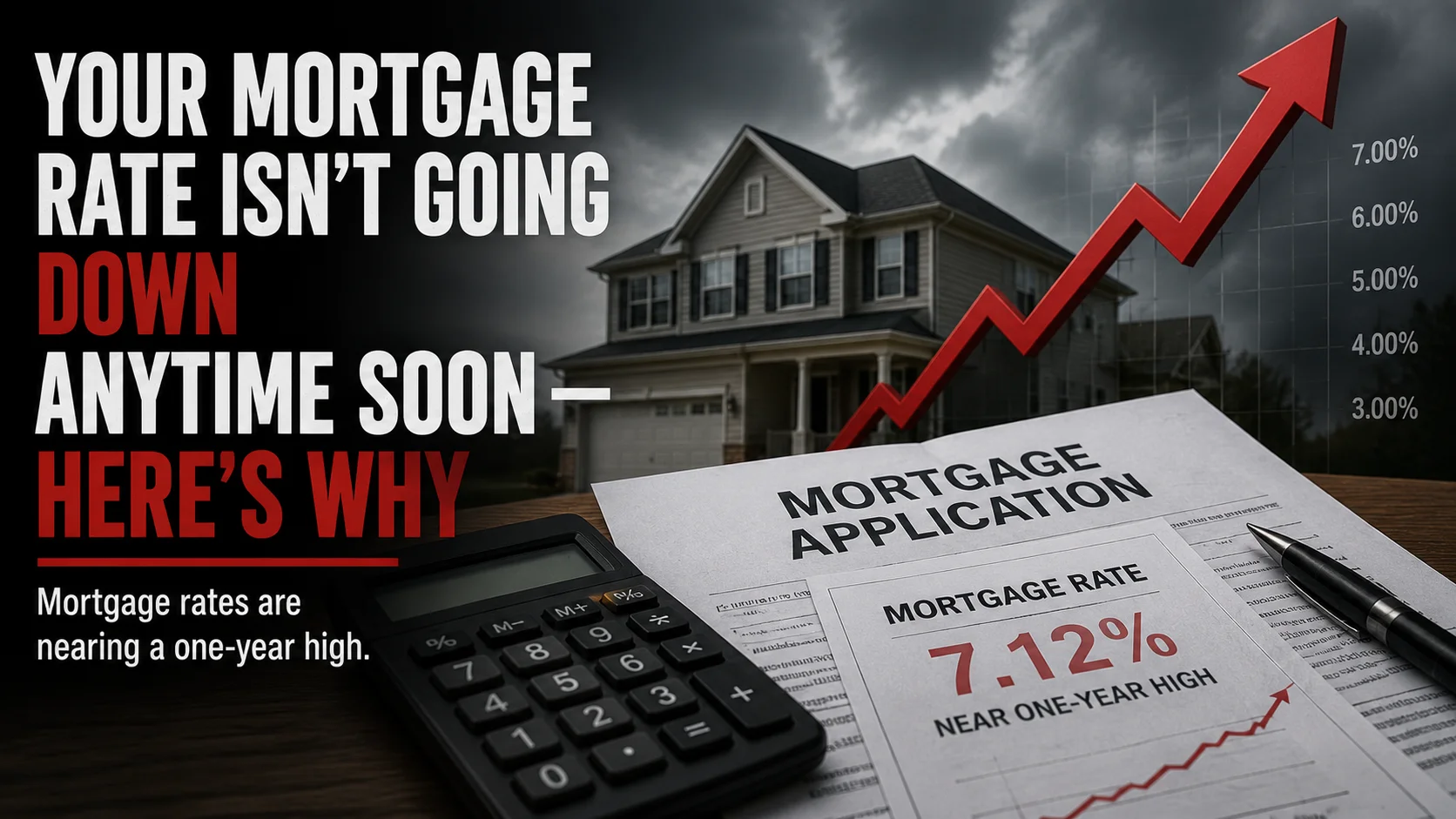
Mortgage rates are nearing a one-year high.

Growth slowed more than expected in the second quarter even as inflation ticked down, leaving the Fed's next move anyone's guess.
The Federal Reserve left its benchmark interest rate unchanged for a fifth straight meeting Wednesday, holding steady in a 3.5%-to-3.75% range under new Chair Kevin Warsh's second meeting at the helm. What stood out wasn't the decision itself — it was who disagreed with it. Three Fed officials dissented, arguing the central bank should have raised rates to fight inflation, an unusually hawkish split for a Fed that has spent most of the past two years debating whether to cut.
The backdrop explains the tension. Two economic reports released the same week showed the economy losing steam: second-quarter GDP growth slowed to a 1.5% annualized rate, down from 2.1% in the first quarter and below the 1.8% economists expected. At the same time, the Fed's preferred inflation gauge — the personal consumption expenditures price index — dipped 0.1% in June, pulling the annual inflation rate down to 3.7% from 4.1% the month before.
That's a classic bind for policymakers: growth is cooling, which normally argues for lower rates, but inflation is still well above the Fed's 2% target, which argues for holding firm or even hiking. Bond markets read it as more uncertainty ahead — the 10-year Treasury yield climbed to roughly 4.66%, and the 30-year yield jumped to around 5.19%, one of its highest levels in nearly two decades.
For anyone with a mortgage, a car loan, or a credit card balance, this matters directly. Credit card rates track the Fed's benchmark closely, so those costs aren't moving anytime soon. Mortgage rates follow longer-term Treasury yields more than the Fed's rate itself, and they've already climbed near a one-year high — a trend not helped by renewed tensions in the Middle East pushing energy costs and investor caution higher at the same time.
Chair Warsh has said he'll continue holding press conferences after every meeting this year, a break from past practice meant to make the Fed's reasoning clearer. The next test comes at the Fed's following meeting, where the growth-versus-inflation tug-of-war will only have gotten more visible.
Comments (0)
No comments yet. Be the first to share your thoughts.