Canada Just Added 75,000 Jobs — 5 Times What Anyone Expected
July's jobs report blew past forecasts, pushing unemployment to a two-year low of 6.4%, even with looming U.S. tariffs clouding the outlook.

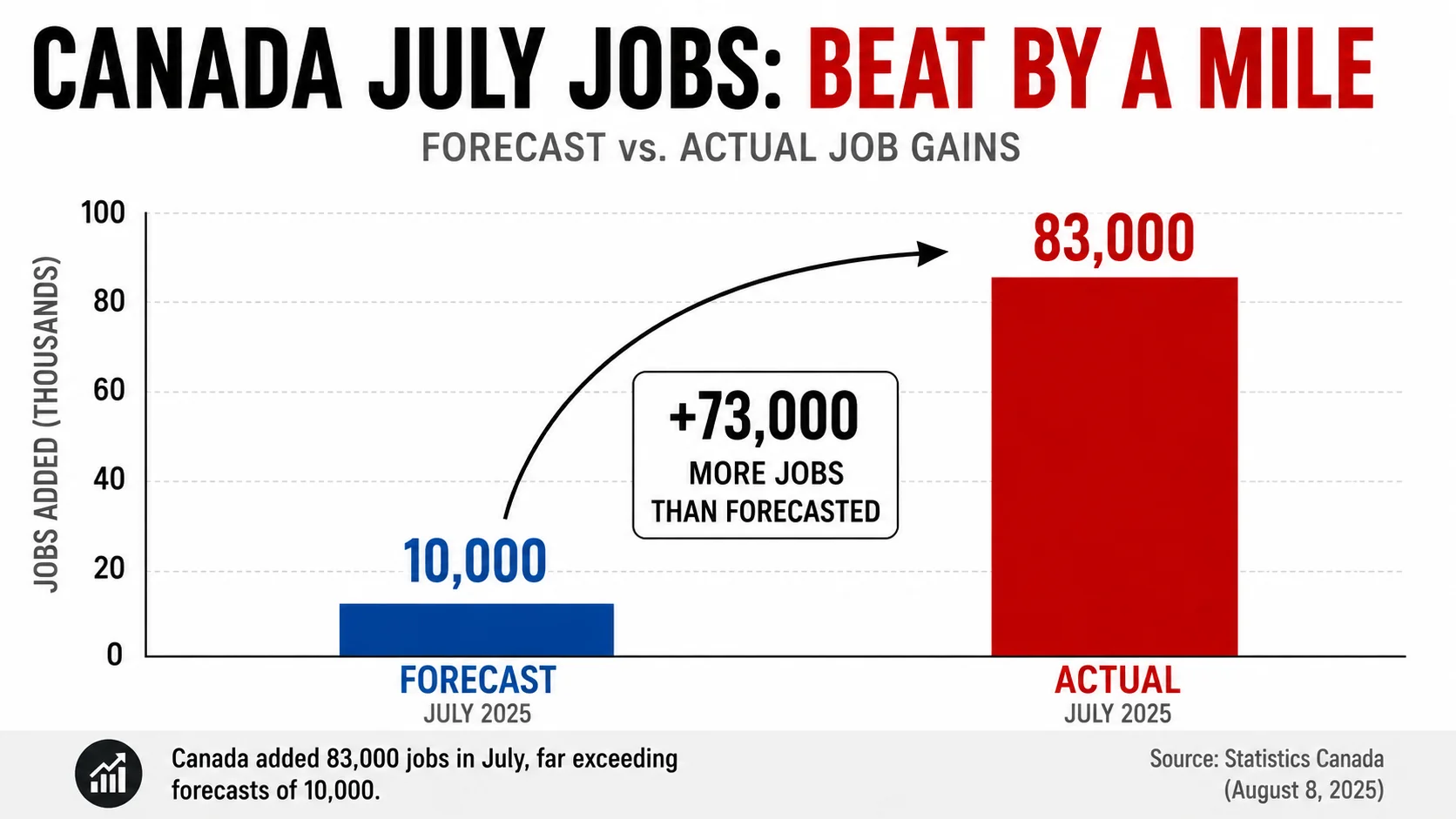
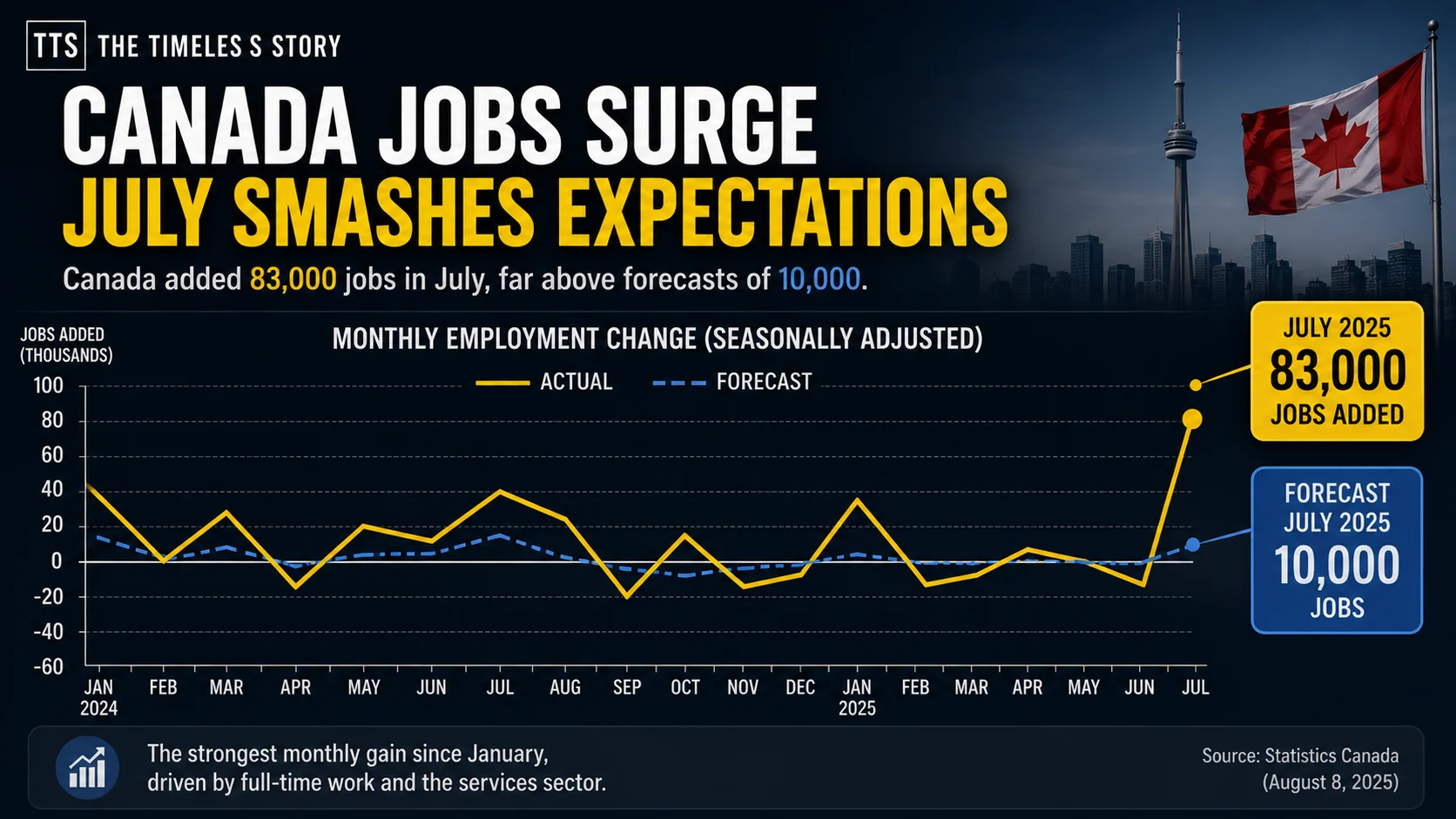
Statistics Canada's July labour force survey landed Friday showing the economy added 75,000 jobs — five times the 15,000 economists in a Reuters poll had predicted — pushing the unemployment rate down to 6.4%, its lowest level in two years.
Why You Should Care
This is the kind of number that's easy to skim past, but it's genuinely one of the stronger signals Canada's economy has sent all year, arriving at a moment when tariff threats and a distant war have made most economic news feel bleak. Ontario alone added 52,000 jobs, and the country is now up 181,000 jobs since April. If you've been job-hunting, or you're a young worker who's struggled the past two summers, this is the clearest evidence yet that the market has genuinely loosened up — youth unemployment is down nearly two full points from a year ago.
Complex to Simple
Economists build their forecasts like weather predictions — using patterns from the recent past to guess what's coming. When the actual number comes in five times higher than predicted, it's a bit like a forecaster calling for light rain and getting a full-blown storm instead: not necessarily a bad storm, just a sign that the usual patterns didn't hold this time, and the underlying conditions were stronger than the models accounted for.
What Both Sides Are Saying
Economists like CIBC's Andrew Grantham welcomed the report as consistent with GDP data suggesting genuine recovery, even with more slack left to absorb. RBC's Nathan Janzen offered a more tempered read, noting the "labour market is not yet strong" in absolute terms — the unemployment rate remains above historical norms, and wage growth actually decelerated in July to 2.8% from June's 3.3%, a detail that complicates the purely celebratory version of this story.
What's Next
Watch how the Bank of Canada reads this alongside the ongoing tariff threat and Iran-driven energy price uncertainty heading into its next rate decision — a report this strong makes a near-term rate cut far less likely, even with wage growth cooling.
Support Independent Journalism